



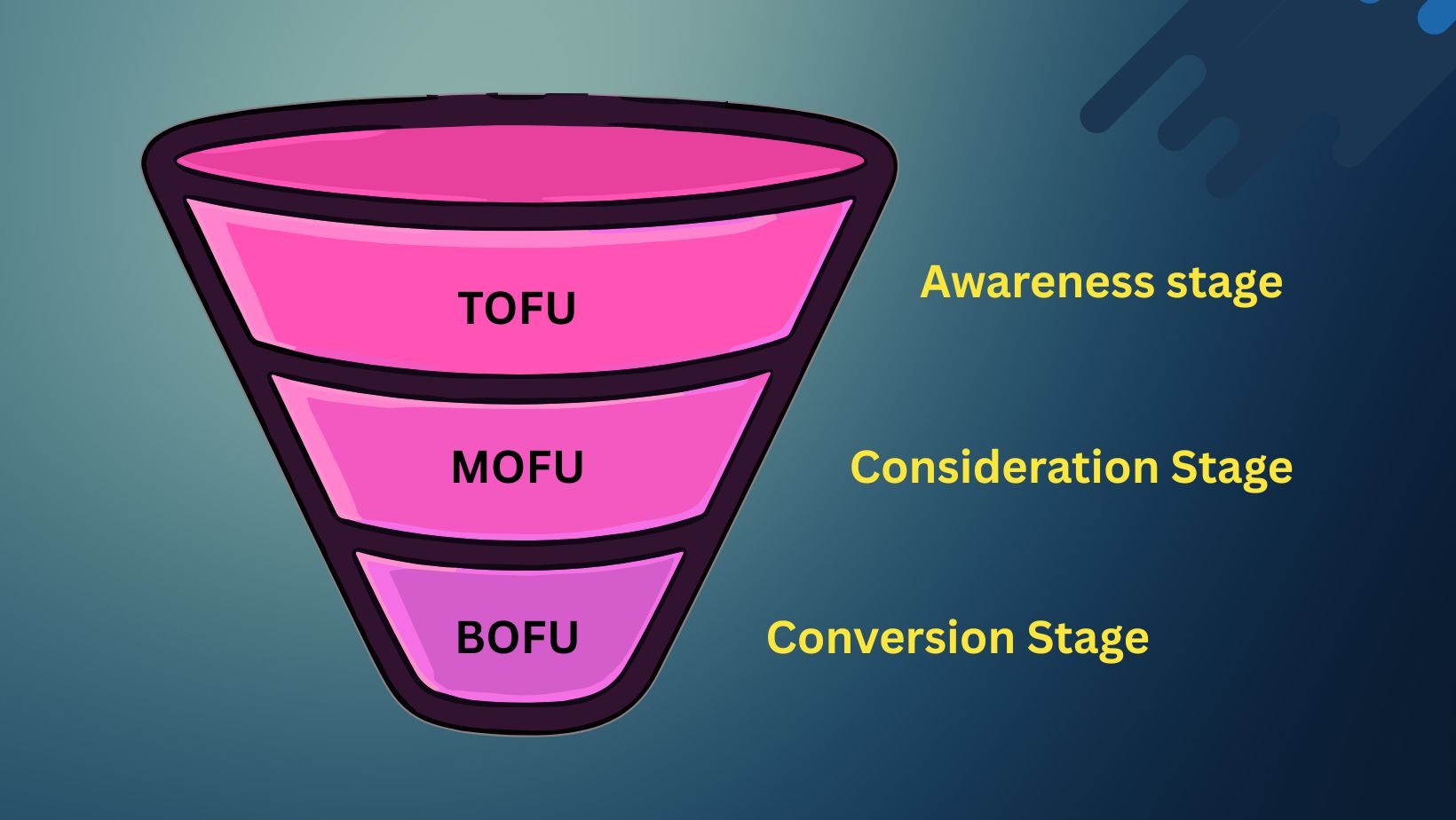
The digital marketing funnel is a strategic framework that maps the customer journey from initial awareness of a brand to the final purchase and beyond. It helps marketers understand how to attract, engage, and convert prospects into customers using targeted strategies at each stage. This guide provides a detailed exploration of the digital marketing funnel, focusing on its three primary stages—Awareness, Consideration, and Conversion—along with the post-conversion phase of Loyalty/Advocacy. Designed for newcomers in the digital marketing field, this material explains the purpose, strategies, metrics, and real-world applications of each stage, offering a clear understanding of how businesses guide audiences toward meaningful actions.
What is the Digital Marketing Funnel?
The digital marketing funnel, often referred to as the sales or conversion funnel, represents the stages a consumer goes through before making a purchase or taking a desired action (e.g., signing up, requesting a quote). It visualizes the process of turning a broad audience into loyal customers by addressing their needs at different points in their journey. The funnel is typically divided into three main stages:Awareness: Introducing the brand to potential customers.
Consideration: Engaging prospects as they evaluate the brand’s offerings.
Conversion: Encouraging prospects to take a specific action, such as purchasing.
Some models include a post-conversion stage—Loyalty/Advocacy—to focus on retaining customers and turning them into brand advocates. Each stage requires tailored strategies, content, and channels to move prospects closer to conversion while building trust and relationships.
1. Awareness Stage
The Awareness stage, or the top of the funnel (TOFU), is where potential customers first discover a brand, product, or service. At this point, prospects may not have a specific intent to purchase but are seeking information, solutions, or entertainment. The goal is to capture their attention, generate interest, and introduce the brand to a broad audience.
Purpose
- Increase brand visibility and reach.
- Attract a large audience of potential customers.
- Educate prospects about the brand or solutions to their problems.
Strategies
- Search Engine Optimization (SEO): Optimize website content for broad, high-traffic keywords to rank higher on search engines like Google. For example, a fitness brand might target “how to start a workout routine” to attract beginners.
- Content Marketing: Create engaging, educational content such as blog posts, videos, infographics, or podcasts that address audience pain points or interests. Content should be easy to consume and shareable.
- Social Media Marketing: Share eye-catching posts, reels, or stories on platforms like Instagram, TikTok, or Twitter to reach diverse audiences. Paid social ads can amplify reach to specific demographics.
- Pay-Per-Click (PPC) Advertising: Run display or search ads on platforms like Google Ads or Facebook Ads to target users based on interests, demographics, or search behavior.
- Public Relations (PR) and Influencer Marketing: Partner with influencers or publish press releases to gain exposure through trusted voices.
Content Examples
- Blog posts like “10 Tips for Healthy Eating on a Budget.”
- Social media posts with engaging visuals or trending hashtags.
- Short videos explaining a common problem (e.g., “Why Your Website Isn’t Getting Traffic”).
- Sponsored ads targeting broad audiences with compelling visuals.
Example
A sustainable clothing brand wants to attract eco-conscious shoppers. They publish a blog post titled “Why Sustainable Fashion Matters in 2025,” optimized for SEO, and share it on Instagram with a carousel post highlighting eco-friendly fabrics. They also run a Google Ads campaign targeting “sustainable clothing brands,” driving traffic to their website.Metrics
- Impressions: Number of times content is displayed (e.g., ad views, social post views).
- Reach: Number of unique users who see the content.
- Website Traffic: Total visits to the website from organic, social, or paid sources.
- Social Media Engagement: Likes, shares, comments, and follows.
- Brand Mentions: References to the brand on social media or external sites.
Challenges
- Standing out in a crowded digital space with high competition.
- Creating content that resonates with a broad audience without being too generic.
- Balancing paid and organic strategies to maximize reach while managing costs.
2. Consideration Stage
The Consideration stage, or the middle of the funnel (MOFU), is where prospects actively evaluate a brand’s products or services to determine if they meet their needs. Having discovered the brand in the Awareness stage, they now seek more detailed information to make an informed decision. The goal is to nurture leads, build trust, and position the brand as a solution.
Purpose
- Educate prospects about the brand’s offerings and value proposition.
- Build trust and credibility through detailed, relevant content.
- Encourage prospects to engage further with the brand (e.g., signing up for a newsletter).
Strategies
- Content Marketing: Provide in-depth content like case studies, whitepapers, webinars, or comparison guides that showcase the brand’s expertise and solutions.
- Email Marketing: Send targeted email campaigns with educational content, such as product demos, how-to guides, or customer success stories, to nurture leads.
- Social Media Marketing: Share testimonials, behind-the-scenes content, or user-generated content to build credibility and foster engagement.
- SEO: Target mid-funnel keywords that indicate research intent, such as “best eco-friendly clothing brands” or “how to choose a CRM software.”
- Retargeting Ads: Use PPC to retarget users who visited the website but didn’t take action, reminding them of the brand through tailored ads.
Content Examples
- Case studies highlighting how a product solved a customer’s problem.
- Webinars or live Q&A sessions addressing common questions.
- Email sequences with tips, product comparisons, or free trials.
- Social media posts featuring customer reviews or product demos.
Example
The sustainable clothing brand from the Awareness stage now targets users who visited their website. They send an email series with a free downloadable guide, “How to Build a Sustainable Wardrobe,” and share customer testimonials on Instagram. They also run retargeting ads on Facebook, showcasing their best-selling eco-friendly jeans.Metrics
- Email Open Rates: Percentage of recipients who open emails.
- Click-Through Rates (CTR): Percentage of users who click on links in emails, ads, or content.
- Time Spent on Site: Duration users spend exploring the website.
- Lead Form Submissions: Number of users who fill out forms (e.g., for eBooks, webinars).
- Engagement Metrics: Comments, shares, or likes on mid-funnel content.
Challenges
- Keeping prospects engaged without overwhelming them with information.
- Differentiating the brand from competitors offering similar solutions.
- Ensuring content is relevant and personalized to diverse audience segments.
3. Conversion Stage
The Conversion stage, or the bottom of the funnel (BOFU), is where prospects take a desired action, such as making a purchase, signing up for a service, or requesting a quote. At this stage, they are ready to commit, and the goal is to make the process seamless and compelling.
Purpose
- Drive sales or specific actions (e.g., registrations, downloads).
- Remove barriers to conversion (e.g., complex checkout processes).
- Reinforce the brand’s value to encourage immediate action.
Strategies
- PPC Retargeting: Run highly targeted ads to re-engage users who showed strong intent (e.g., added items to a cart but didn’t purchase).
- Email Marketing: Send promotional offers, limited-time discounts, or cart abandonment emails with clear calls-to-action.
- Content Marketing: Create conversion-focused content like product pages, FAQs, or comparison charts with strong CTAs.
- Social Media Marketing: Use shoppable posts, direct links to purchase pages, or influencer endorsements to drive sales.
- Website Optimization: Streamline landing pages, checkout processes, and forms to reduce friction and improve user experience.
Content Examples
- Emails with discount codes or free shipping offers.
- Landing pages with clear CTAs like “Buy Now” or “Start Your Free Trial.”
- Social media ads featuring limited-time promotions.
- Product demo videos addressing final objections.
Example
The sustainable clothing brand sends a cart abandonment email offering a 10% discount and free shipping to users who left items in their cart. They also run Instagram shoppable ads showcasing the same products, linking directly to a streamlined checkout page. A landing page highlights a 30-day money-back guarantee to reduce purchase hesitation.Metrics
- Conversion Rate: Percentage of users who complete the desired action.
- Cost Per Acquisition (CPA): Cost of acquiring a customer through paid campaigns.
- Sales Revenue: Total revenue generated from conversions.
- Return on Ad Spend (ROAS): Revenue earned per dollar spent on advertising.
- Cart Abandonment Rate: Percentage of users who start but don’t complete a purchase.
Challenges
- Overcoming final objections (e.g., price, trust, or product fit).
- Competing with other brands offering similar deals or incentives.
- Ensuring a seamless user experience across devices and platforms.
4. Post-Conversion: Loyalty and Advocacy
While not always included in the traditional funnel, the post-conversion stage focuses on retaining customers and turning them into loyal advocates who promote the brand. This stage extends the customer journey beyond the purchase, fostering repeat business and word-of-mouth marketing.
Purpose
- Retain customers for repeat purchases or long-term engagement.
- Encourage customers to share positive experiences and refer others.
- Build a community of loyal brand advocates.
Strategies
- Email Marketing: Send thank-you emails, loyalty program invitations, or personalized product recommendations to maintain engagement.
- Social Media Marketing: Encourage customers to share reviews, photos, or testimonials with branded hashtags or contests.
- Content Marketing: Provide post-purchase content like user guides, tutorials, or exclusive offers for repeat customers.
- Customer Service: Offer exceptional support to resolve issues and build trust.
- Referral Programs: Incentivize customers to refer friends with discounts or rewards.
Content Examples
- Thank-you emails with exclusive discounts for future purchases.
- Social media contests encouraging customers to share their experiences.
- Blog posts or videos with tips on getting the most out of a product.
- Loyalty program announcements with tiered rewards.
ExampleThe sustainable clothing brand sends a thank-you email to customers after a purchase, including a 15% off coupon for their next order. They invite customers to join a loyalty program with points for every purchase and encourage them to share outfit photos on Instagram with #EcoStyle, offering a chance to be featured on the brand’s page.Metrics
- Customer Retention Rate: Percentage of customers who return for repeat purchases.
- Net Promoter Score (NPS): Likelihood of customers recommending the brand.
- Referral Rate: Number of new customers acquired through referrals.
- Social Shares: Number of user-generated posts or mentions.
- Lifetime Customer Value (LCV): Total revenue generated from a customer over time.
Challenges
- Maintaining engagement after the initial purchase.
- Managing negative feedback or reviews effectively.
- Balancing incentives for loyalty without eroding profit margins.
Integrating the Funnel with Digital Marketing Channels
The digital marketing funnel is most effective when paired with the right channels at each stage. Below is a summary of how key digital channels align with the funnel:
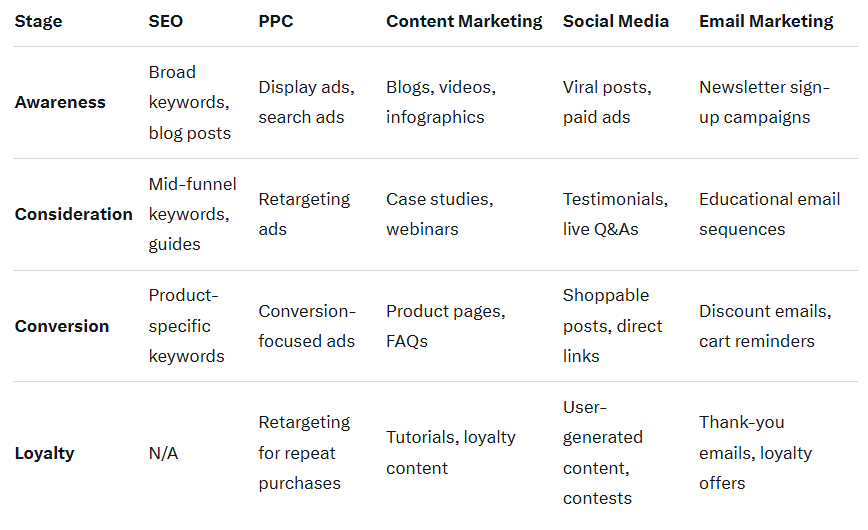
By aligning channels with funnel stages, marketers can create a seamless journey that guides prospects from discovery to advocacy.
Why the Digital Marketing Funnel Matters?
The funnel is a critical tool for structuring marketing efforts because it:
- Guides Strategy: Helps marketers tailor content and campaigns to specific audience needs at each stage.
- Improves Efficiency: Focuses resources on high-impact activities, reducing wasted effort.
- Enhances Measurement: Provides clear metrics to track progress and optimize campaigns.
- Builds Relationships: Encourages long-term engagement by addressing customer needs throughout their journey.
For students, understanding the funnel is essential for grasping how digital marketing strategies translate into business outcomes. It provides a roadmap for creating campaigns that resonate with audiences and drive measurable results.
Conclusion
The digital marketing funnel—Awareness, Consideration, Conversion, and Loyalty/Advocacy—offers a structured approach to guiding prospects from initial discovery to long-term loyalty. By employing tailored strategies, content, and metrics at each stage, marketers can effectively attract, engage, and convert audiences while fostering lasting relationships. For those aspiring to enter the digital marketing field, mastering the funnel is a foundational skill that unlocks the ability to design impactful campaigns and understand consumer behavior in a digital world.
Leave a Reply